

Roanoke Valley, Virginia

 July 30, 1927 – April 1, 2014
I caught Angie in the spotlight for the first in a continuing column on our members; shown here with her prize winning whole cloth entry at the Salem Fair.
After 40 years working for a CPA firm she left the work world and took up quilting. She’d been doing hand work such as embroidery, knitting, needlepoint and crochet, but had never done anything in the quilting area beyond collecting patterns and magazines.
A general beginner class at a local quilt shop started her off. She continued with other classes; many through our guild. Most of her 100 quilts became gifts of comfort and kindness. For a while she presented a quilt to each new baby in her church, but her fellow Presbyterians proved too passionate for her. She created many quilts for the Good Samaritan Hospice, for our guild’s comfort quilts project, and made double knit single bed quilts for transient men at the City Rescue Mission.
Her favorite project was teaching hand piecing to 10 and 11 year olds at the Presbyterian Community Center in the after-school program for “at risk” youngsters. Four of an original 10 completed their quilts. After hand piecing them, Angie made the sandwiches & turned them. Then each girl tied them to complete the project. Angie made “Hand Quilted by..” labels for each girl with their name and age. Their obvious pride made it clear she’d made a real difference in their lives.
She’s one of the Crazy 8’s; currently comprised of Joanne Kling, Claire Barton, Sallie Powers, Nancy Ratner, Ann Weaver, Dianne Bragg, Wanda Nawrocki, and Angie. In January they begin a new project — single bed quilts for the women/children facility at City Rescue Mission.
She does all her assembly with a sewing machine, but enjoys hand quilting whole cloth quilts even though hand problems force her to limit her time. She shifted away from using a large frame to an 18” hoop which she can use from the recliner. She gets smaller stitches with a size 12 between, but usually uses a 10 because the 12’s break so easily. She saves her back by thread basting with the quilt sandwich on a pair of banquet tables raised about 6”.
— Susan Kraterfield
Our 2005 & 2007 shows had lots of lucious work by Angie. Do click on the pictures to get more detail.


Thanks to Susan Kraterfield and her helpers for running the “French Roses” or “Rosey Posey” block kit exchange. Thanks to Heather French for providing patterns for everyone, asking only that we display our completed projects for Show&Tell. We look forward to seeing the many beautiful and fun quilts!
Each month more completed Posies arrive in show n tell. Here’s what we’ve collected so far..
Here is a tutorial for Betty’s new string piecing charity project:
While the technology challenged is working on her tutorial the following are some websites that have tutorials with good information. Remember the sizes have been changed ((to protect the innocent), sorry Dragnet pun) to fit the templates that I had available. If everything goes well info should be done by this weekend complete with pictures and supplies needed.
Thanks for your help in creating these amazing charity quilts .
Betty Ann
39 Star Quilters signed up for the exchange at the guild meeting last night. Wow!
Here are some adjustments now that we’ve all discussed this at guild.
I’ll swap all the sets during the meeting and you can pick them up at the end of meeting. Can’t Wait 🙂
Before I leave you; I just had to share just a few of the cool pictures I found googling “french roses quilt”..
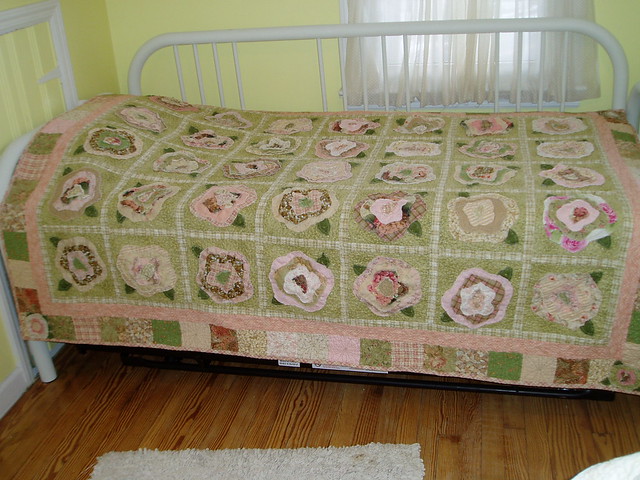

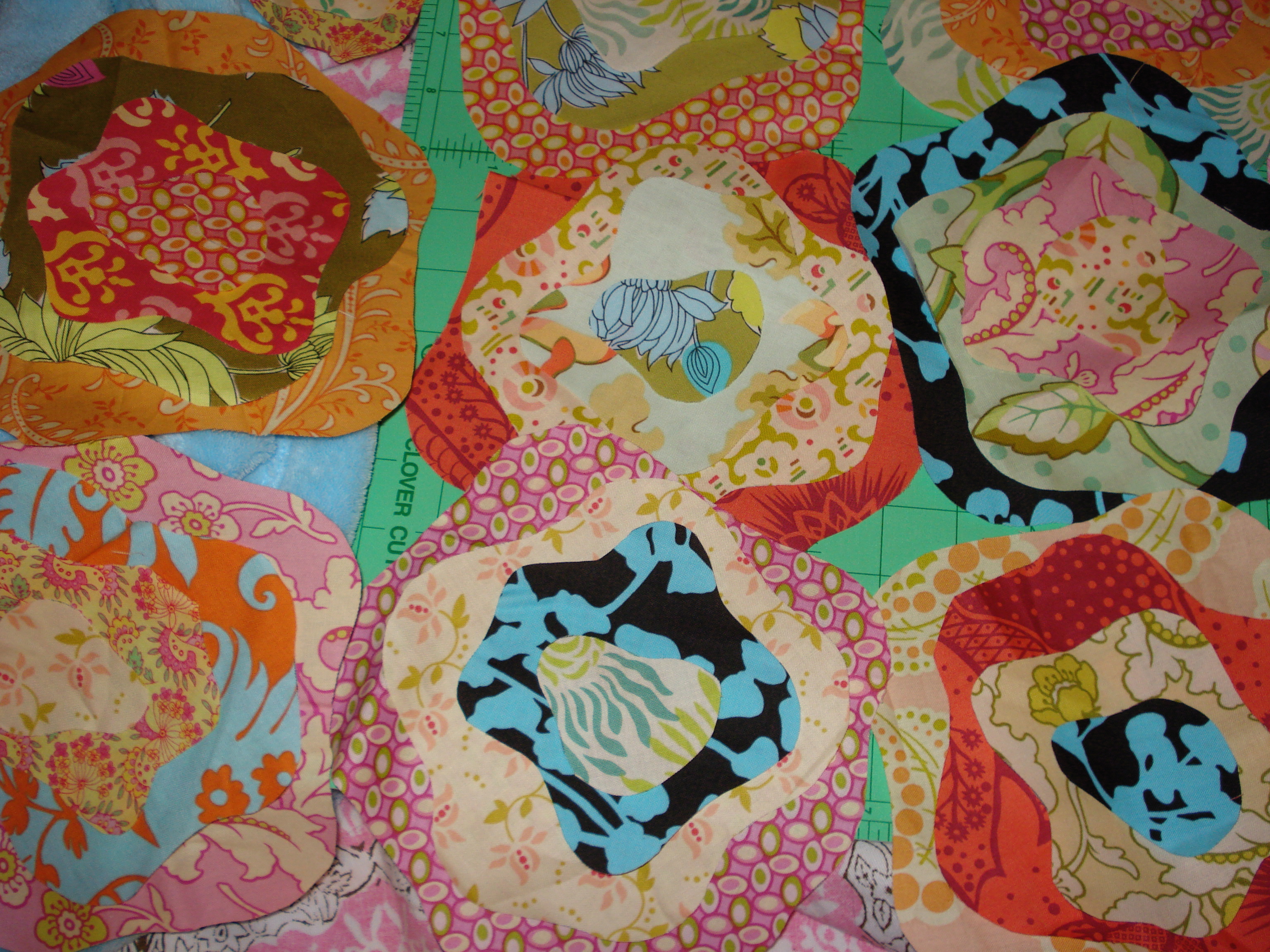
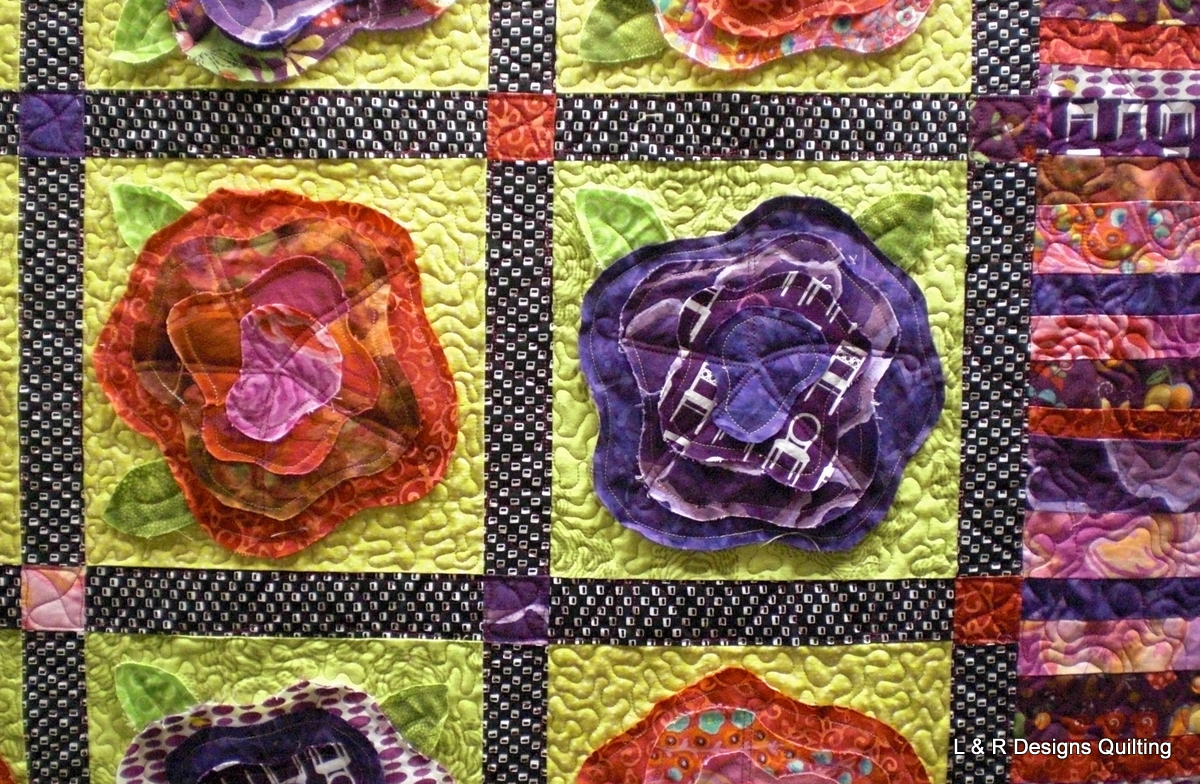
— Susan K
I’ve wanted to do this project ever since I first saw Joyce’s on her sun porch. For now, make kits of fabric to exchange and bring them to the January meeting. In January you’ll get Heather French’s French Roses pattern to take home with your traded fabric kits. Make sure I get your name so I get a pattern for you.
Heather French is graciously providing the patterns asking only that we display our completed projects for show-n-tell.
Kit:
10” Background Square – Light
8” petal square – A
7” petal square — B
5” petal square — C
3” petal square — D
2”x3” leaf rectangles– 2 in a set — E
Bring your sets back in JANUARY to exchange.
Sue Huntington from Carilion Hospice is starting a Memory Quilt project. Memory quilts would be made from the clothing of a patient and presented to surviving loved ones after their death.
Star Quilters’ Board decided not to formally expand our comfort/soldier projects to include this effort, but that shouldn’t keep any of you from participating one your own. Below you’ll find contact information for the volunteer coordinator for Carilion Hospice and a quilter who has made many of these, as well as some email excerpts from them to help you get an idea of what the project entails.
“…we’d mention [this] as an option upon the patient’s admission but would be initiated and completed in most cases after the patient’s death. In general, I’m thinking this would be a small lap quilt made from the patient’s clothing as selected by his family members. Turn around time for producing the quilt would be set by the quilter and communicated to the family in advance. We have a small donation fund that would reimburse the quilters for any necessary supplies – binding fabric, batting, thread, etc. The design could be consistent for all the quilts or different per the discretion of the quilters. This could be something the quilters work on together or individually. The quilters could be involved in presenting the quilts to the families or hospice could present them on behalf of the quilters.”
Sue HuntingtonCarin Kraft (carin.l.krafft@comcast.net) has made many of these and is relocating to our area. She intends to work on this with Sue Huntington.

” I’m attaching photos of a quilt I made last fall for the late drummer of BonJovi, Jeff Kinder. Jeff was the original drummer when they first started, before Tico became drummer. Jeff passed in November, 2011 at age 54 from brain cancer. The guitar part of the t-shirt is the center of the quilt front and the back of the t-shirt is centered on the back of the quilt. Believe it or not, there are pieces of silk ties, boxer shorts, bandanas, a pair of jeans and silk shirts in the quilt, which goes to show the huge array of clothing you get from a family. The backing fabric was one of Jeff’s sheets.
The nurse of the patient gets clean clothing in good condition from the patient’s contact person. The nurse then gives the clothing to the volunteer coordinator, who in turn contacts me and the clothing is brought to my home. Please try to have the nurse get the contact person’s name and phone number. Some times families have special requests and I like to touch base with the contact person. At that time, when speaking with the contact person, they are so touched that you are taking on making memory quilts and they really do appreciate our time and efforts. It is suggested that the clothing be what was the patient’s favorites, as the quilts will be giving comfort and memories of the patient to their family. It is important that whatever scraps of clothing there are or leftover pieces of clothing that they be returned to the family. I usually keep the scraps and leftover pieces of clothing in a separate bag and each quilt in it’s own bag. In my 2+ years of making quilts, I’ve run the gamut from onesies, baby blankets, dresses everyday and fancy to bed sheets, silk ties, and a tapestry throw.
36″ square is a reasonable size for a memory quilt, and sews together quickly. Sometimes my finished quilt is a little bit larger because I get carried away and make more blocks than needed. That happens because I try to use a piece of each garment in each quilt. I keep the designs of the quilts easy. Sometimes I’ll take a block from a quilt pattern and use it for the quilt design. Some tops, fleece jackets or sweatshirts will have embroidery or some detail that stands out. Those are always used, and one of the first things I look for when I go through the clothing. It really is the quiltmaker’s choice, there are no set guidelines for the quilt designs. One thing I do make sure to do is machine quilt on the diagonal or straight horizontal or vertical lines. Clothing doesn’t allow for fancy free motion quilting, I’ve tried to do free motion quilting and found myself ripping out the stitches only to do straight line quilting. I normally purchase batting along with fabric for the borders, binding and backing. I submit the receipts to my volunteer coordinator who in turn reimburses me. Normally the clothing is cotton, fleece, silk or polyester, seldom is there a fabric which would need cotton or a sew on stabilizer to make it easy to sew.
There is no limit of quilts per se, I think the original limit was 3. Normally families want 1-3 quilts. I had a family in 2011 that wanted 5 quilts. That was quite the undertaking! Yet it was gratifying to hear that one of the granddaughters used her quilt to bring her newborn daughter home from the hospital in. Currently, the coordinator and I determine the numbers of quilts per family on a case by case basis.

Sue Bainter, who is a member of both the Star Quilters’ Guild and the Old Church Gallery Quilters’ Guild, won 2nd place in the long-arm category of the Old Church Gallery Quilters’ Guild’s annual show. The show was held October 5 and 6, 2013, in Floyd, Virginia. Sue began her quilt in a workshop with Lucille Amos, a certified Judy Neimeyer instructor. The quilt was beautifully quilted by Linda Whisman.

